Adaptive Trigger Test - DualSense trigger haptics checker
The DualSense uses adaptive triggers that can change trigger resistance in supported games, but a browser does not expose those programmable resistance profiles through the standard Gamepad haptics interface. GPADLAB therefore tests the browser-exposed trigger-rumble capability instead: three timed haptic patterns are sent to L2 and R2 and you confirm whether localized trigger feedback is felt. The result describes browser trigger-haptic response, not full adaptive-resistance health.
Check the haptic effects available here
Connect your DualSense
Plug in via USB (recommended) or pair over Bluetooth. The tester checks the controller name for DualSense identifiers and gates non-DualSense pads since adaptive triggers are Sony-exclusive hardware. Best results in Chromium browsers (Chrome, Edge, Opera, Brave).
Capability detection
The tester probes the vibration actuator's effects array for the experimental "trigger-rumble" effect type. If supported, the test can request localized haptic vibration on L2 or R2 independently. This is trigger rumble, not programmable trigger resistance. If trigger-rumble is unavailable, the tester falls back to "dual-rumble", which vibrates the controller body and cannot verify per-trigger haptic output.
Three haptic patterns per trigger
The tester sends three timed trigger-rumble patterns at different intensities and durations: continuous, strong, and pulse. The Gamepad API parameters control trigger-rumble intensity and duration; they do not set a mechanical resistance point, spring force, bow-like tension, or gun-style detent.
Confirm each scenario
After each effect fires, tap Yes if you felt localized trigger haptic feedback or No if you did not. Because the result is based on user confirmation and browser support, missed patterns should be retested before treating them as evidence of a controller hardware problem.
Composite verdict
Per-trigger response maps to the number of confirmed haptic patterns: 3 = Responding, 2 = Mostly Responding, 1 = Partial Response, 0 = No Response. The overall result uses the weaker of the two triggers. This is a browser-haptics verdict and does not by itself certify the DualSense adaptive-resistance mechanism.
Trigger rumble and adaptive resistance are different
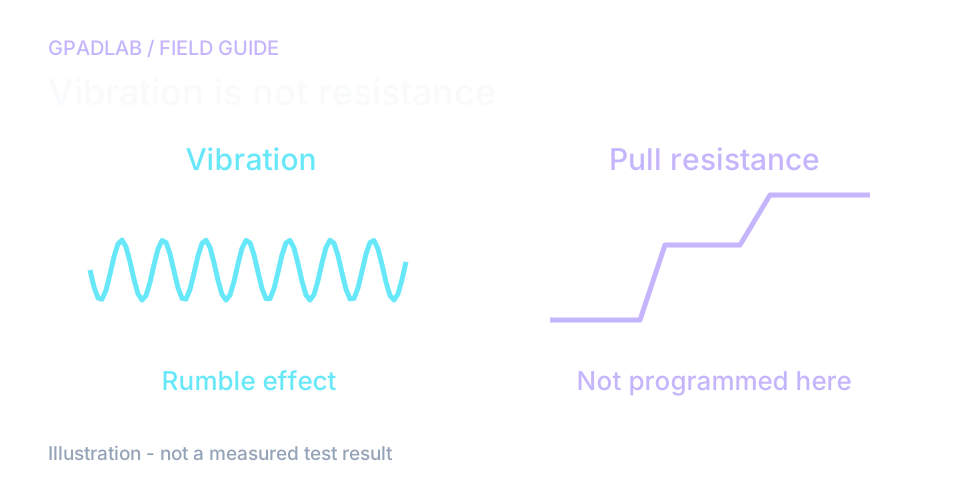
What you can check here
Run each short pattern and report whether you feel feedback. Keep your grip similar for both triggers. The result reflects your confirmations and the effect support reported by the browser.
In fallback mode, feedback may come from the controller body. That does not establish that the trigger itself produced the vibration.
What to check in a supported game
Adaptive resistance changes how hard a trigger feels to pull. The browser effects used here do not reproduce that feature.
If resistance is missing in a game, check that game's trigger-effect setting and its controller support. A successful rumble pattern here cannot prove full adaptive-trigger health, and an unsupported browser result cannot prove damage.
What the verdict means
Each trigger is rated independently from the trigger-haptic patterns you confirm feeling. The result reflects browser-exposed trigger-rumble response, not the full mechanical adaptive-resistance system.
| Confirmations | Verdict | What It Means |
|---|---|---|
| 3 of 3 | Responding | All three trigger-rumble patterns were felt. The browser exposed localized trigger haptics and the trigger responded to each pattern in this test. This does not verify programmable adaptive resistance. |
| 2 of 3 | Mostly Responding | Two of three trigger-haptic patterns were confirmed. Retest the missed pattern under the same browser and connection conditions before drawing a hardware conclusion. |
| 1 of 3 | Partial Response | Only one trigger-haptic pattern was confirmed. Browser support, connection conditions, user perception, or controller behavior can all affect the result, so repeat the test before diagnosing hardware. |
| 0 of 3 | No Response | No trigger-haptic patterns were felt. This can result from browser or platform support, connection behavior, effect delivery, or controller hardware. Confirm the adaptive trigger in a supported PS5 game before treating the browser result as a hardware failure. |
Compatible devices
This browser trigger-haptics test is intended for Sony DualSense-line controllers. trigger-rumble support depends on the browser, operating system, connection mode, and how the controller is exposed to the Gamepad API.
Common repair guides
Related diagnostics
Adaptive Trigger questions
Adaptive triggers are a DualSense feature that lets supported games vary the force or resistance felt through L2 and R2. The controller uses a motorized trigger mechanism to create game-controlled resistance effects such as changing tension or a distinct resistance point. That mechanical resistance system is different from the Gamepad API trigger-rumble effect used by this browser test.
The Gamepad API exposes haptic effects through GamepadHapticActuator.playEffect(). The "trigger-rumble" effect provides localized vibration on left and right trigger buttons through leftTrigger and rightTrigger intensity parameters. GPADLAB can use that effect when the browser and controller expose it, but the API does not provide the programmable resistance, stop position, or detent controls used by DualSense adaptive-trigger game effects. If trigger-rumble is unavailable, the tester falls back to whole-controller dual-rumble.
Native mode means the browser exposes trigger-rumble, so GPADLAB can request localized haptic vibration on L2 or R2. It does not mean the browser has full access to DualSense adaptive-resistance programming. Fallback mode uses dual-rumble on the controller body and therefore cannot establish that either trigger produced localized haptic output. For per-trigger haptic testing, use a browser and connection mode that actually reports trigger-rumble support.
Adaptive-trigger mechanisms are mechanical and motorized assemblies, so wear, damage, contamination, firmware behavior, or connection/software issues can affect how they feel or respond. A browser trigger-rumble failure does not identify which of those causes is responsible. If the resistance effect is also missing in a supported PS5 game, use controller diagnostics or repair guidance to investigate further.
Yes. Replacement adaptive trigger modules cost $25-40 each for the DualSense (more for DualSense Edge due to the swappable design). Installation requires opening the controller casing, desoldering ribbon cables, and replacing the trigger assembly. Difficulty is intermediate-to-advanced - most users with soldering experience can do it, but iFixit guides recommend professional repair for the DualSense Edge specifically.
No. Adaptive resistance requires game support and the effect varies by title. This browser tool does not reproduce a game's adaptive-trigger resistance profile; it invokes the browser-exposed trigger-rumble haptic effect directly when available.
trigger-rumble is an experimental Gamepad API haptic effect with uneven browser support. Current Chromium-based browsers can expose it on supported hardware, while Firefox and Safari do not currently provide the same support. Because support can change with browser, operating system, firmware, and connection mode, the tester checks the gamepad's reported effects rather than assuming compatibility.
Adaptive-trigger resistance and trigger-rumble are different effects. Adaptive resistance changes the force you feel while pulling L2 or R2 in supported games. Gamepad API trigger-rumble is localized vibration at the trigger surface. GPADLAB's browser test can request trigger-rumble when exposed, but it cannot directly command the DualSense resistance or detent profiles.
How we test adaptive triggers
The page requests three short haptic patterns for each trigger and asks what you feel. Trigger rumble is vibration, not programmable DualSense resistance. When only body-rumble fallback is available, the result describes that fallback. The page does not measure pull force or certify adaptive-trigger health.Dedicated methodology article not yet published; see the methodology hub for the methods currently available.
Run the GPADLAB Controller Health Score
The Controller Benchmark combines six core diagnostic stages into GPADLAB's site-defined composite score. Use the stage breakdown for diagnosis and the score for repeat comparison.
Run the Benchmark